
I want to say how lovely the weather is, and I hope you won’t be bored
Meditations on sun, snow, small talk, and my weatherman dad <3

I’m entering Maria Hernandez Park, and it’s 47 degrees, clear skies, sun beaming. It hasn’t been like this in a while. I forgot my sunglasses, but I don’t mind, desperate to take in the brightness, observing the rich pink cherry blossoms beginning to bloom through squinting eyes. I’m not sick, but my nose is suddenly runny, dripping with weather confusion.
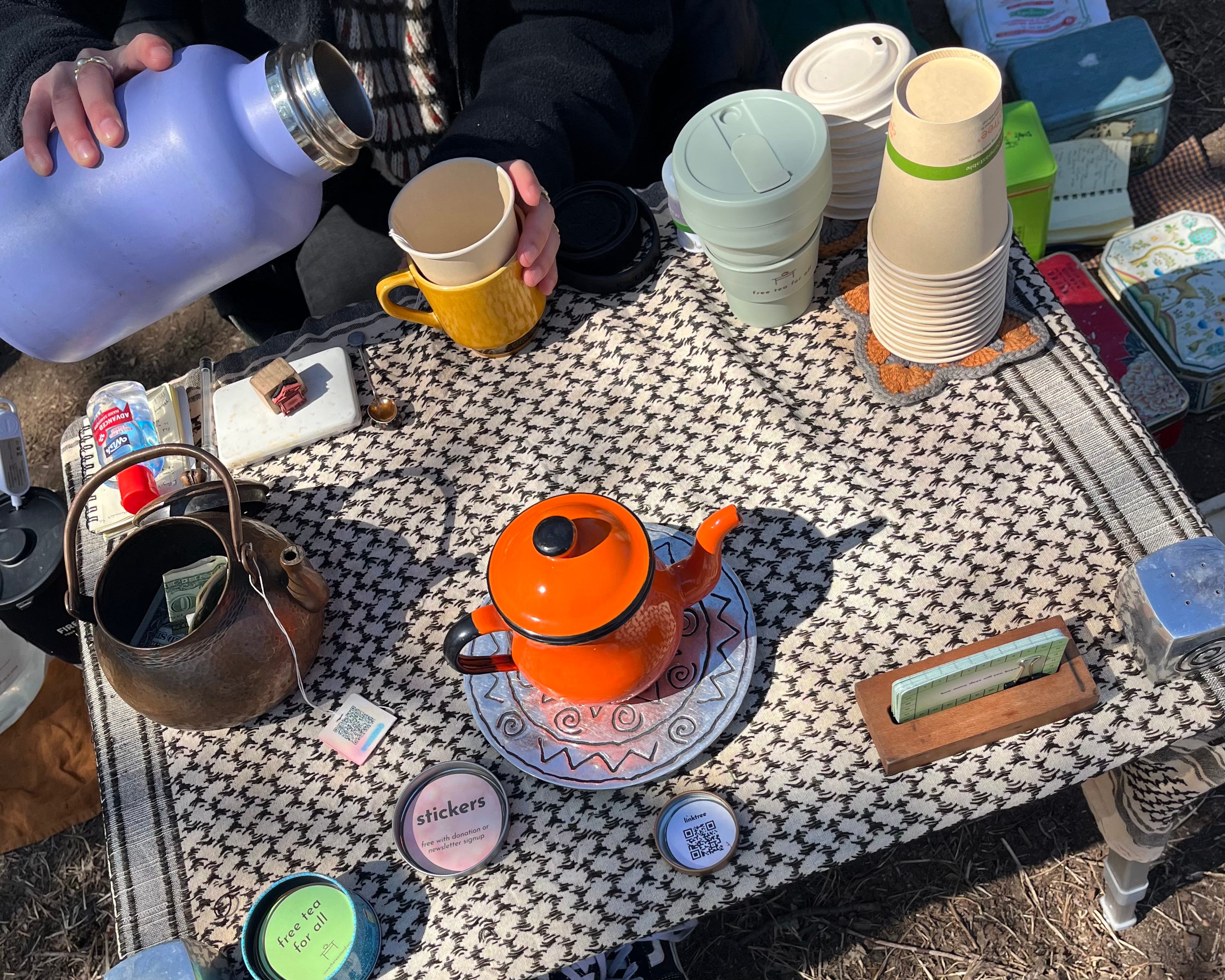
In the corner of the park, a small folding table is set up for something called the “perpetual brew” by The Tea Stand; they’re serving free tea there every day of April. They offer three selections, and I choose green with mint and rose, then watch as the brewer pours hot water from a giant thermos. People chit-chat all around the table; there are murmurs about a game of freeze tag happening soon.
I take my tea to the center of the park, where a ring of benches circles a plaza and a skate track, and I sit in my favorite spot for people-watching and people-listening. It’s always noisy, and today, two different wheeled speakers compete from opposite sides of the ring, the one closest to me winning out, blasting Evanescence. In the middle of the swath of concrete, a labyrinth is laid in brick, which at first took me weeks of visiting to notice, even though I’d walked right past it or on top of it several times. Even now, having racked up close to hundreds of hours in this spot, I’ve only seen one person walk it in full, but I love that it’s there, an invitation for reflection amidst the chaos.
Above me, I think I hear a drone flying, but when I look up, I see it’s a toy airplane, swirling and dipping and making all sorts of erratic maneuvers. Directly above it, a real airplane glides by, smooth and steady. In the middle, perfectly timed, a flock of birds swoops into the scene, floaty and beautiful, a mediator for the planes. I finally sip my tea after letting it cool for a long time, and it is delicious and the temperature is just right.
**
At the tail end of February, after an already-long winter, New York was hit with its ninth-biggest blizzard in the city’s history. Weather reports warned of over two feet of snow and 40+ mph wind gusts, and a state of emergency was declared with a travel ban for that Sunday night, the height of the storm.
My sister Caroline and I went to a yoga class in our neighborhood in the early evening, and as we walked out, the snow was coming down in thick clumps, and it felt a little thrilling, not knowing what the night would bring. Classes and meetings and appointments in the city were canceled that Monday, and I cozied up at home, assuming the conditions were too brutal to withstand.
Still, when I opened Instagram in the evening, I saw posts of snowball fights and sledding, NYC photography accounts documenting the will of New Yorkers to go out and play no matter what. I resolved to get back outside the next day.
After bundling up in layers and heavy boots, I embarked on my usual walk through Maria Hernandez Park, which was now filled with dozens of snowmen and snow sculptures people had constructed while I was staying warm. In addition to all the truly talented sculptors who’d made their mark, an anonymous curator had added a special touch — museum-style signs staked beside the most grandiose creations, with paragraphs of handwritten analyses, fake-citing their artistic references and influences. I spent time reading each one, charmed by the collective whimsy of this fleeting exhibit, sure to melt soon. Transformed into a snow sculpture garden, the park was peaceful and outrageous and a clear display of how people continually come together, anonymous, ephemeral.


**
Now it’s spring and it feels weird to write about the snow, like it was years ago, even though it’s been barely a month and a half. On my short walk out of the park, I pass a man playing guitar, a woman painting a stretched canvas, someone balancing on a slackline they suspended between two trees, someone else hammocking between two other trees. People are smoking, reading, laughing with friends, barefoot even though it’s not that warm yet. It seems everyone is eager to feel the sun on their skin or their skin on the ground, never mind that this ground is mostly dirt patches with a few sprinklings of grass in between, a bit of litter floating about in the wind.
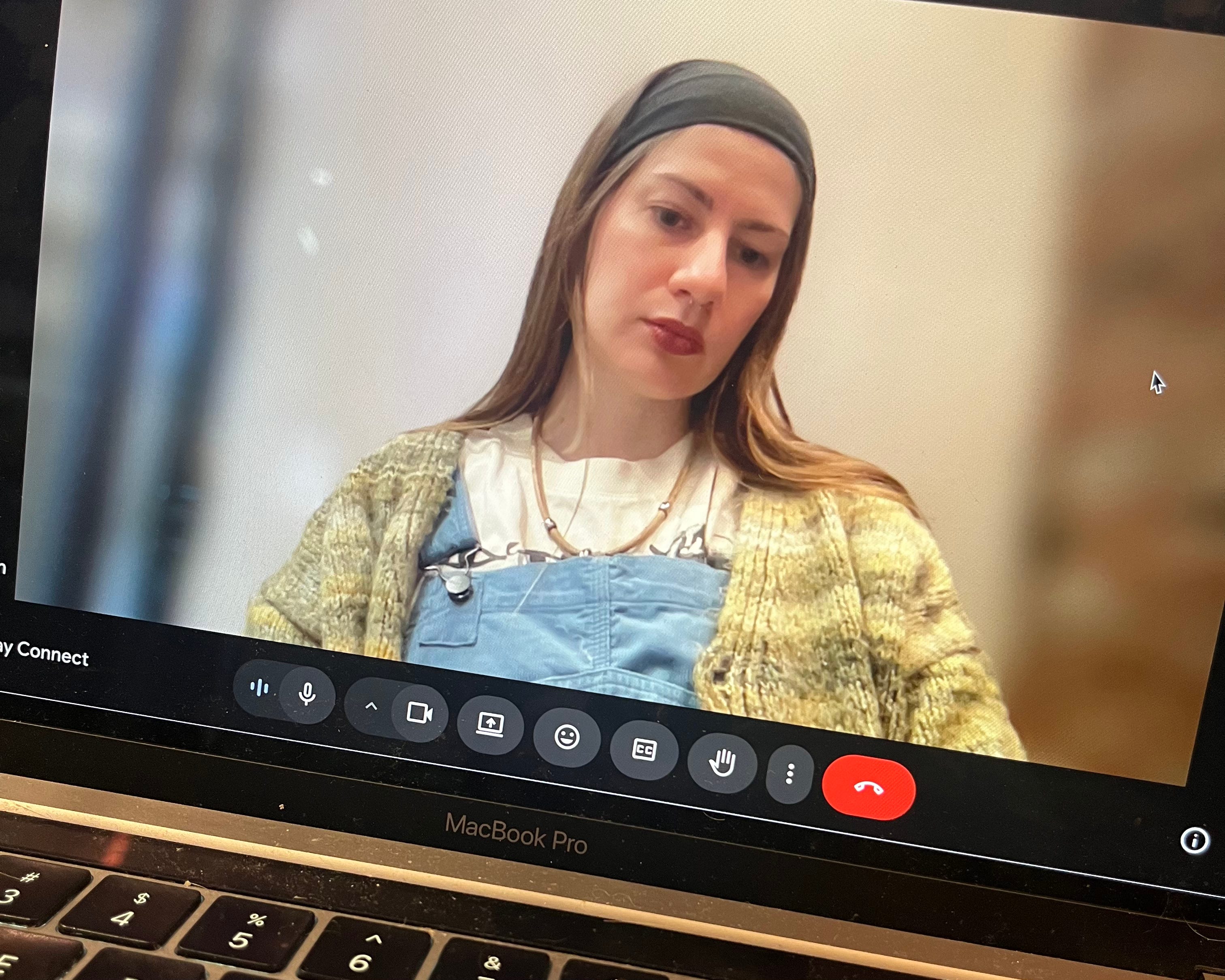
When I get back to my laptop post-afternoon-walk, I log on to a Zoom meeting that’s vaguely about marketing plans. We spend the first three minutes discussing the nice weather, just like we discussed the snowy weather or we’d otherwise discuss the rainy weather or oppressive heat in another month. The weather is boring to talk about, I start to think, and we all know this, and we all do it anyway, the bane of small talk before we get to the agenda.
But maybe it’s getting to the agenda that’s the boring part, and the weather only seems boring because its discussion feels obligatory, a fake pleasantry for a meeting we’d rather not be in at all. Like the way “How are you?” “Good, how are you?” “Pretty good” is boring — not the fault of the topic, but rather, the way it’s met and the circumstances surrounding it.
I wonder what would happen if we talked about weather more instead of less, if we lingered on the subject instead of hastily flipping through the expected script.
**
I begin with my dad, who studied the weather. He earned his degree in meteorology from Purdue before moving to DC for a research job with NASA, and I realize I know surprisingly little about his actual work there, only that he often wished he’d taken a job in forecasting, his true passion, instead.
On a trip home to Cincinnati the first week of April, I tell him I want to talk to him about the weather, and he obliges with no questions asked.
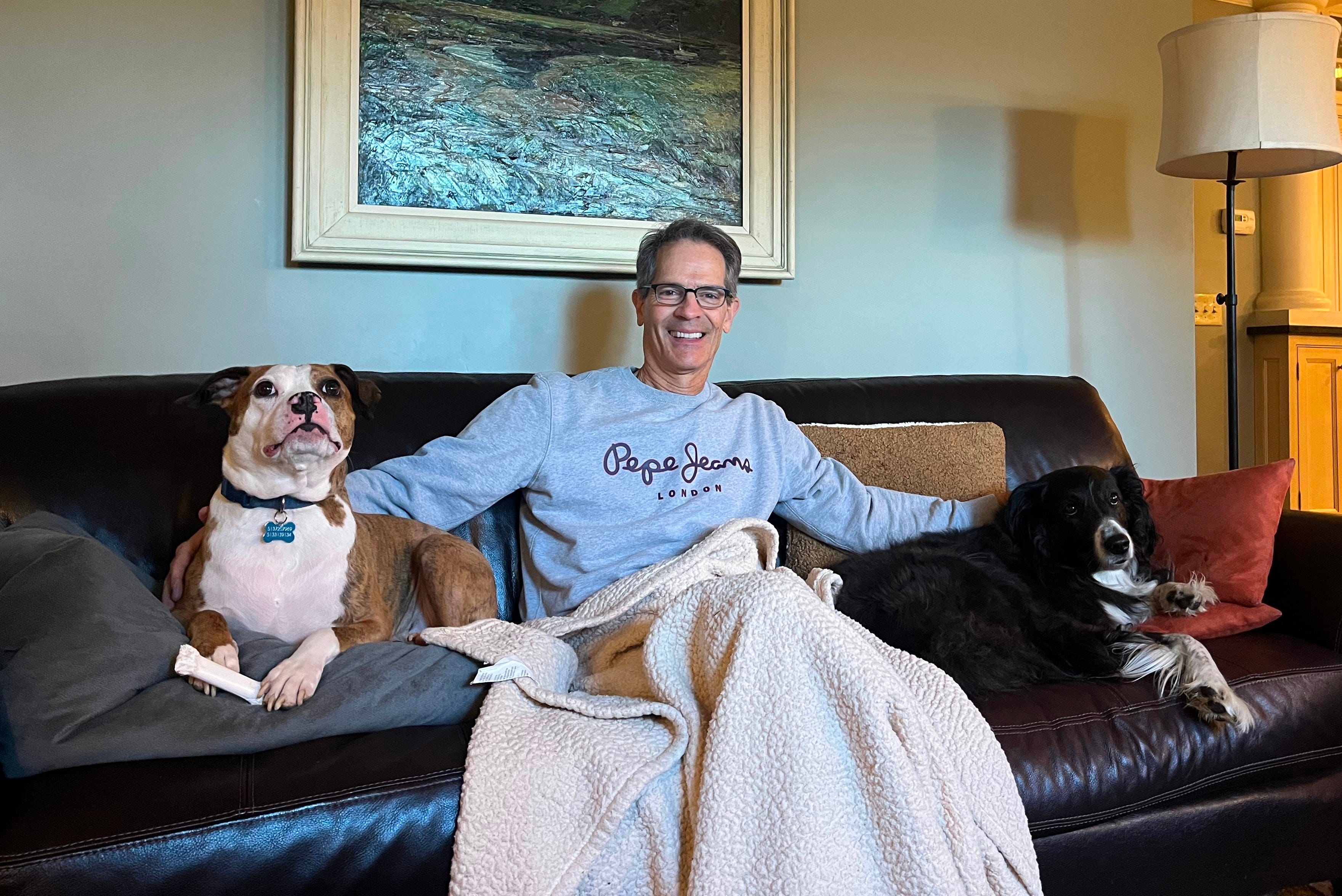
I start with what I know to be his favorite topic. My dad has always had a proclivity for snow, as much of it as possible. “Why snow?” I ask now.
“I was interested in snow ever since I was a little kid, maybe six, seven, eight years old,” he says. “And I don’t know why, but I found out through my experience with other forecasters that people who really love weather and forecasts, for some reason, love snow. It’s just common. Most weathermen love snow.”
I probe into his other weather interests.
“I would say, second, after snow, severe storms interest me. That’s what I did my research on after college. I was personally in a tornado when I was a young kid, so I had some experience that scared me.”
“What?” I ask. I am quite sure he has never told me this.
“We were going to the movies with my parents, all in a station wagon, and I looked behind me and I could see this black swirling cloud coming up on us. We all hit the deck on the floor of the car, and it was shaking. It blew out three of the windows, and my dad had a little glass in the back of his head. But the most traumatic experience was that there was a trailer camp a quarter mile away from the road, and a person who must have been in the camp came up to our car, all bloody, hardly any clothes, asking for help. And we couldn’t do anything, we were in a traffic jam, and it really scared me so much. I was about nine.”
“Do you think that experience made you want to study weather?” I ask.
“I think it was unrelated,” he says. “I was already doing the daily weather report in front of the class.”
“Wait, really? Like just you?”
“Just me, yeah. The teacher must have known I was interested in weather a lot, and I must have said I would like to give the forecast, so I gave the forecast every day.”
I ask if he still has his forecasting skills despite being out of that career for many decades (he thinks so: “sometimes I’ll look at the model and say, that meteorologist’s way off”). I ask about what he actually did for work in his research job (in the simplest terms, he ran models with different inputs and co-authored papers about the findings) and what his papers were about (“you can look them up,” he says, disinterestedly — “Short-range forecasting and nowcasting, using a simple, isentropic prediction model,” the NASA research collection says).
I suggest that many people consider the weather to be a boring conversation topic. To this, my mom chimes in from the kitchen, where she’s chopping vegetables: “Oh yeah, the epitome of small talk!”
I ask my dad if he likes to talk about the weather, and he says he does because he has a pretty good command of it. “I’ve just been through the research, I know how the models have developed.
“But most people don’t understand the models,” he continues. “To run a model, you need data. Most people don’t know about what’s called radiosondes. Every day, they’re launched from the earth; they’re balloons with weather instruments and they record the pressure, temperature, wind speed, and they go up to 50,000 feet. And that data is then aggregated all across the US, and that’s the input data into the models. Because you can’t run a model unless you have some current data to get a good forecast, right?”
“Balloons?” I ask. This is the first I’m hearing of radiosondes.
“Yep.”
“From where?”
“There’s one in Wilmington, I think. There’s usually one or two per state. And that’s how all of the models would get more accurate, if we could get more data. The more data you have, generally the better.”
“Hm. I’m surprised there aren’t more per state.”
“Yeah, in fact, I think Trump cut back on some of it.”
[Mom in the background] “Yeah, they cut back on a lot of it.”
“Disappointing,” he finishes.
I change the subject back to something cheery, snow days. Several times each winter, I remember waiting in front of the TV for the scrolling school closure listings at the bottom of the weather report, cheering when it finally got to the letter S and we realized our freedom.
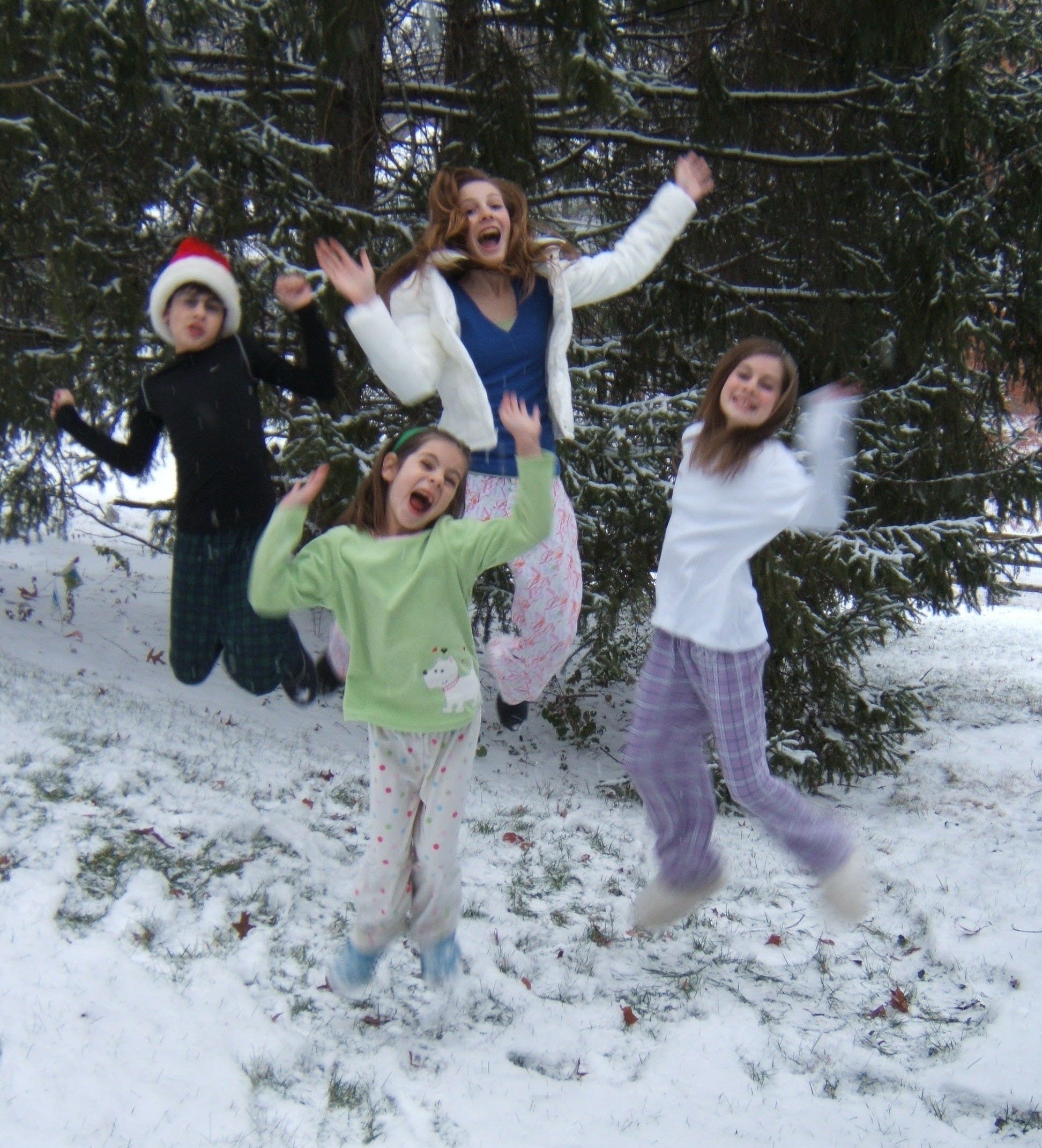
My dad can’t remember any snow days from his childhood that stand out in particular, but my mom is excited to share: “I remember one that was awesome. I think it was just a delay, but in that time of the delay, we made a huge snowman. My mom was pregnant, I guess with Clay. We [five of her other siblings, I presume] all stood for a family picture with the snowman; she was next to it with her big pregnant stomach, and we’re all in line. And then we had hot chocolate before going to school.”
One of my dad’s favorite weather days was in his twenties, the blizzard of February 1983. “I was out at NASA, and I’d only been there about four months, and we had one of the biggest snowstorms in Washington DC ever. We had 23 inches. Nobody went in to work, and my friends and I were all just walking around while it was thundering and lightning and snowing during the day. Thundersnow. That was so much fun.”
“Are you recording this or something?” he asks me at the 16-minute mark.
“Yeah, I’m recording this.” (I told him this at the start.) “I think I’m going to write an essay about the weather.”
“I still remember, when I was very little, looking out the window,” he now says unprompted, more wistfully than before. “I always looked at the trees and noticed which way the wind was blowing. I was just very perceptive of the weather. Like, how did that happen? I don’t know. I was obviously born with it because there’s nothing, I don’t think, that happened when I was one, two, or three years old, that got me into it, not my parents or brothers. I just thought it was interesting to know which way the wind was blowing. It was like a clue as to what might be happening.”
**
Of course, the reason weather is a go-to small talk topic is because of its universality. It’s something we can all understand, even if we’re on opposite sides of the country, and it’s something we can all feel together if we’re united by place.
Often directly influencing our plans, weather shapes how we interact with the world on a given day. And often directly influencing our mood, weather shapes how we feel about the world on a given day.
On the Sunday I plan to finish this essay, the forecast has initially called for rain, just like the day before, and I’m excited to light candles and write all day and begin some other creative projects at home. But when I wake up and step out for coffee next door, I see that the Apple Weather app has steered me wrong. I check again, and now it’s showing a warm-ish afternoon filled with sun.
Immediately, my plans for the day rearrange in my mind. I think about how I could probably never live in California, or I’d never get anything done, one temperate day blending into the next. I decide I will write for a bit, then go outside, see what’s happening in my neighborhood, feel the sun with the cool breeze before it’s time to complain of the heat.
I’ll notice the wind in the trees and call my parents. On Monday, when my co-workers ask about my weekend, we’ll all reflect on the nice weather that came out of nowhere, how surprising, how lovely.



When the weather is as interesting as it has been lately, I don’t think it’s boring to talk about at all!
Love that holiday card picture!